



The pharmacogenomics space witnesses growth in new developments and clinical trials. The convergence of breakthroughs in next-generation sequencing technology has significantly lowered the cost and enhanced the availability of genetic testing. Emerging developments in PGx have paved the way for more efficient, safer, and economically viable drug therapies. This progressive shift from the trialand- error approach to prescription methods facilitates personalized treatments tailored to patients’ genetic profiles. This transformative approach not only improves the predictability and efficacy of treatments but also ushers in a new era of precision medicine.
According to research, the pharmacogenomics market is expected to expand from $8.17 bn in 2023 to $11.00 bn by 2028, at a CAGR of 6.12 percent during 2023-2028. This growth is attributed to precision medicine’s increasing popularity and robust research and development investments in pharmacogenomics technologies, driving novel product development. Escalating adverse drug reaction rates fuel the global adoption of pharmacogenomics. DNA sequencing, microarray, polymerase chain reaction, electrophoresis, and mass spectrometry offer pharmaceutical companies accelerated market entry and improved patient experiences, stimulating market growth. The focus on integrating genetic and environmental data further propels the pharmacogenomics market. The industry is expected to experience significant growth due to technological advancements and breakthroughs.
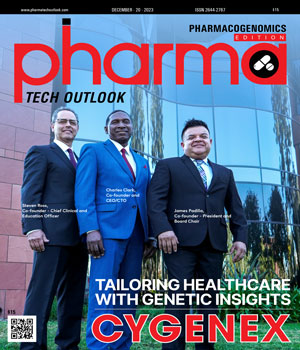
This edition of Pharma Tech Outlook brings to readers the key developments in Pharmacogenomics and how firms leverage the latest technology solutions to offer top-notch services. It features thought leadership articles from Itedale Namro Redwan, CSO, CELLINK, and Carlos Pedraza, PhD., Director of CNS Biology at Alkermes.
Itedale Namro Redwan talks about the advancements and benefits of 3D bioprinting. Scientists are increasingly adopting bioprinting for pharmaceutical research, addressing drug delivery, efficacy, toxicity, and screening. Integrating 3D bioprinting in preclinical testing offers cost efficiency and enhanced productivity, including personalized therapy development using patientderived cells. Carlos Pedraza sheds light on the drug discovery landscape. R&D institutions maintain competitiveness and increase the likelihood of reaching scientific Proof of Concept (PoC) and clinical stages by diversifying their early discovery pipeline.
This edition features stories from pharmacogenomic companies leveraging emerging technologies to provide better health care and medications.
In this edition featuring top pharmacogenomic services providers, we hope you find the appropriate company suited to your business requirements.